Japan — A Country for All Seasons
Japan is one of the few destinations in the world where every season offers a dramatically different and equally compelling experience. Cherry blossoms in spring, festivals and fireworks in summer, golden foliage in autumn, and pristine snow in winter — Japan never disappoints regardless of when you visit.
Spring (March – May) — Cherry Blossom Season
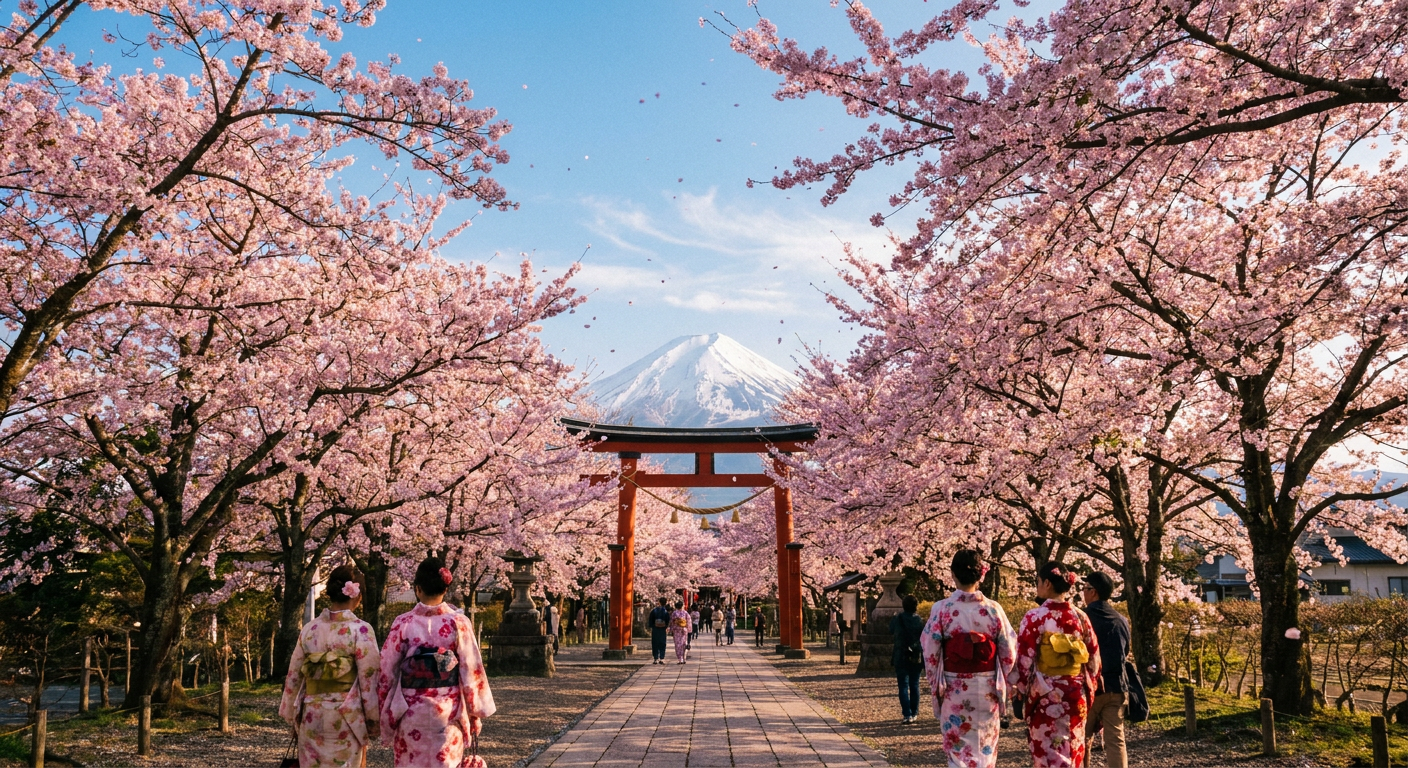
This is Japan's most celebrated season and arguably the best time to visit. The sakura (cherry blossom) season typically runs from late March to early April in Tokyo and Kyoto, beginning earlier in southern Japan and later in northern Hokkaido. Parks fill with picnicking families and colleagues in a tradition called "hanami." The week of peak bloom is Japan at its most breathtakingly beautiful — but book well in advance as this is peak tourist season.
Cherry Blossom Forecast
The cherry blossom forecast changes annually based on temperature. For Tokyo, peak bloom typically falls between March 25 – April 5. Kyoto typically peaks March 28 – April 7. Osaka follows a similar timeline to Kyoto. Hokkaido (Sapporo) blooms much later — late April to early May. The Japan Meteorological Corporation publishes annual forecasts from January, which is when you should finalize travel dates.
Summer (June – August) — Festivals and Fireworks
Japan's summer is hot (30–35°C) and humid, especially July–August. Despite the heat, summer is spectacular for festivals: Gion Matsuri in Kyoto (July), Awa Odori in Tokushima (August), and spectacular hanabi (fireworks) displays across the country. The Obon festival in mid-August is deeply cultural. Mount Fuji climbing season runs from July 1 to September 10 — the only time the official trails are open.
Autumn (September – November) — Koyo Season
Autumn (koyo) foliage rivals cherry blossoms in its spectacular beauty. Maple leaves turn brilliant shades of red, orange, and gold from late October through November. Kyoto's temple gardens, Nikko's shrine complexes, and Tokyo's Shinjuku Gyoen National Garden are particularly stunning. Autumn also brings comfortable temperatures (15–25°C) and excellent food — matsutake mushrooms, chestnuts, and persimmons.
Winter (December – February) — Snow, Skiing, and Serenity
Winter is Japan's quietest tourist season (outside New Year) and often the most affordable. Hokkaido receives enormous amounts of snow — Niseko is one of Asia's premier ski destinations. The Sapporo Snow Festival (February) is spectacular. Kyoto's temples dusted in snow have an ethereal beauty. Hot spring (onsen) resorts are particularly enjoyable in winter. The fewer crowds also make winter ideal for photography.
Indian Festivals to Avoid
If you want to avoid peak prices and crowding, avoid travelling during Japanese Golden Week (April 29 – May 5), Obon (mid-August), and New Year (December 29 – January 4). These are periods when Japan itself travels, and accommodation prices spike significantly.
Visa and Planning Tips for Indians
Japan requires a visa for Indian passport holders. The application is document-heavy but straightforward — no interview required. Apply at least 4–6 weeks before travel. A JR Rail Pass purchased before departure is essential for multi-city Japan itineraries. GetTravel.in handles complete Japan tour packages including visa assistance, JR Pass, accommodation, and itinerary planning.